Thursday, June 5, 2014

CHRONICLE OF A CORPSE BEARER

http://pique.pk/culture/04-Jun-2014/chronicle-of-a-corpse-bearer

Chronicle of a corpse bearer

June, 2014

Chronicle of a corpse bearer

A novel by Cyrus Mistry: The story of a struggle for rights


Reading Mistry’s ‘Chronicle of a Corpse Bearer’ I couldn’t shake the feeling that I was getting a glimpse into something secret, almost like Hogwarts, so small and unobtrusive is the Parsi community in the subcontinent.  The book is about this community, or to be more exact about an even tinier sect within that community the Khandhias as the Parsi corpse bearers are called.
The Khandias live in the shadow of the Towers of Silence, which they serve quite literally by bringing bodies of the dead from the community and leaving them in the towers where they lie as per the Parsi ritual of defiling neither the earth by burial nor the air by cremation.  Exposed to carrion vultures the bones are soon stripped clean of the dead flesh and are then disposed of by the priests. No one is allowed into the heart of these towers except the designated priests therefore not even the general Parsi community is aware of their complete layout. For any inaccuracies therefore Mistry asks the reader to remember that this is after all a novel and a work of fiction. 
In fact no one is allowed near a corpse shortly after the person dies because once the priests arrive in the bereaved home, they draw a line in chalk on the ground around the body which only the corpse bearers, the priests and a dog are allowed to cross.  It is unknown how the custom of a dog at the funeral started but Mistry says the tradition is probably as old as Persia itself and started because dogs are said to have the ability to pick up the slightest sign of life; a dog is therefore allowed to sniff at a corpse three times during the funeral ceremonies.
Mistry stumbled on the inspiration for this story while researching a documentary for Channel 4 about corpse bearers in Bombay’s Parsi community. The documentary was never made but the essentially true tale was shaped into the story of Phiroz Elchidana, the son of a priest who is forced to leave home when he falls in love with and marries the daughter of a corpse bearer. Phiroz becomes a corpse bearer himself and joins the desperately poor community of Khandias around the Towers of Silence. The Khandias are a marginalised people, almost if not as untouchable as the untouchable caste amongst the Hindus, and at the time this story begins in the early 1940s they were extremely oppressed with no rights at all.  Phiroz’s story spans a period of some sixty years during which the people of India strove to throw off the British yoke and gain independence. In 1947 the British left India and the subcontinent was partitioned. These greater events are reflected in the tiny pool of the Khandias’ own struggle for rights.  In the 1940s they worked seven days a week and could be called upon to work without break for food or rest.  Phiroz and his friends were involved in the movement to gain rights for their community even while Gandhi started his passive resistance and marches for freedom, and the Quit India movement ‘on the outside’.  The Khandias eventually gained their rest days and rest periods, annual leave and right to education for their children just as the British left India, and India and Pakistan became independent of them and each other.
This is a simply written and touching love story but at least for me the most interesting thing was the fascinating glimpse into the life and workings of the Parsi community. If I had a complaint it was that somewhere in the middle of the book we find the characters quipping about ‘the sugar plum fairy’. What would people of this community living as they do so remote and unexposed to the world know about the sugar plum fairy? But this is always a problem for those who write in English about people who speak another language, to render their speech and idioms into English in a way that preserves the meaning.
Cyrus Mistry received the Disc Prize for South Asian Literature for this book, first published by Aleph Book Company in 2012. His other books are ‘The Radiance of Ashes’ and ‘The Passion Flower: Stories’.

Tuesday, June 3, 2014

SAVING URDU

http://pique.pk/education/03-Jun-2014/saving-urdu


Saving Urdu

A case for language reform


In a world where lives are conducted through text messages and e-mails, why is our language still stuck on black boards and slates?
If literacy is the ability of persons fifteen years of age and over to read and write then here are some sobering facts for Pakistan:  In 2009 according to an estimate just 54.9% percent of the population of Pakistan was literate; broken down by gender only 68.6 % of Pakistani men and 40.3% of women could read and write in 2009.  By July 2014 Pakistan’s total estimated population is likely to be 196,174,380. If those same percentages for literacy hold true (and little appears to have changed) there will probably be 88,278,471 persons unable to read or write in this country by the middle of this year.
Of course, Pakistan is host to a plethora of other problems too, terrorism, corruption, poverty, the oppression of women, the population explosion, poor public health and the devastating power shortage; but illiteracy has an impact on each and every one of them. A nation as illiterate as Pakistan is prone to social unrest; its illiterate women are more likely to be oppressed by illiterate men, themselves oppressed by poverty; its population is likely to be large and unhealthy, and one that is unable to provide for oneself, fewer employment opportunities existing for those who can’t read or write; social development is slower with an illiterate population and more resources have to be spent tending to their needs, resources that could otherwise be spent on power projects.
Most people working in the education and development sectors acknowledge the above, so what’s stopping us from improving the situation? To be sure some of the problems are logistical, there seems to be a dearth of infrastructure and teaching staff, some are political, education has never been a priority in our corridors of power, and some are financial, making people literate takes money, sizable investments.
But there is another kind of problem too: the problem of language. The above mentioned statistics on literacy are based on the criteria that the person is able to read a newspaper or write a letter in any language. Pakistan has two official languages in which state business can be conducted and legal matters settled; Urdu and English. It also has many provincial and regional languages with a multitude of local dialects.
Many of these dialects are yet to be formally categorized, most of these languages don’t have a suitable alphabet or script to write in. They try to use some generic form of the Arabic alphabet and Nastaliq script that Urdu is written in. Urdu itself is historically an independent language to both the alphabet and the script, having existed in oral form under different names for much longer. Urdu is mother tongue to only 8% of the population, English is mother tongue to almost none of the population; the fight of literacy then is also the fight of script, alphabet and language. It is the fight of learning things that don’t come naturally to our native population.
This lack of natural progression from speaking to reading and writing in this country, became apparent to me when I first started teaching adult literacy classes. A fifty year old student of mine, a woman called Naseem Bibi, felt the desire to empower herself at middle-age, she wanted to read and write.
In a few weeks, her desire was turning into frustration. The different alphabets that can make similar sounds were confusing her. The shapes and forms of the letters were alien to her. She had never heard of or used some of the words that were necessary to learn the rules of the language. The lack of an organic progress from her mother tongue to the written word was seriously impeding her learning. 
The experience isn’t too different at the primary school level. Children come from all sorts of linguistic and ethnic backgrounds and often have no rooting in the written languages they’re about to study. Most don’t manage to learn properly before they drop out due to financial pressures.
My own students are frequently unable to differentiate between the ‘tay’ and ‘toay’ sounds, conflating and confusing the alphabets; nor do they think it important to do so, since they don’t need to in their practical lives, it’s only in reading and writing that discerning every alphabet’s sound becomes important.
They have similar problems with ‘qaaf’ and ‘kaaf’, ‘duad’ and ‘daal,’ they don’t understand which ‘hay’ goes where, or what the difference between one ‘yay’ and the other is. The Urdu alphabet and script seem dense and inaccessible to them. Even those who do become proficient struggle to decipher the calligraphic jumbles that are Urdu newspapers.
So perhaps what’s needed along with a bigger emphasis on education is language reform.
In a world that is migrating online we don’t even have a word for the virtual world in our native languages. Nastaliq was notoriously difficult to typeset, it was meant to be calligraphic, hand written.
Because of the problems of font and typeset the presence of Nastaliq online does not match the number of people who can read and write Urdu. Similarly, text messages, e-mails, social media, online chats are all inundated with local language communication in Roman English alphabet, because one script is readily available and the other isn’t.
When both the alphabet and script are facing unpopularity and disuse it’s time, I believe, to sit down and reassess them. Many languages have undergone deliberate reform, Indonesian, Malay, Chinese, Dutch, German, French; the case we are most familiar with however is the language reform in Turkey, when in 1928 a new alphabet was introduced by a Turkish Language Commission at the instigation of Mustafa Kemal Ataturk. 
Although the introduction of a new alphabet had more to do with other social reform and less with literacy, the Romanization of the language brought discernable practical benefits, ease of learning, easier integration with modern teaching method, modern ideas, easier to print, read and publish. The result bears out this argument since following its language reform the literacy rate in Turkey rose from a low 9% to 33% in just ten years. 
Imagine what we could accomplish with a 20% rise in literacy rates and ease of teaching and communicating modern ideas. Imagine the benefit to our local languages if they could all be written in a suitable script and easily printed or put online. Imagine the benefit to children who could learn to read English by learning to read Urdu, and vice versa. Imagine the benefit to children of just studying a non-confusing, easier alphabet.
Not to say, of course, that Romanizing our national language is the one and only way forward, this is just an example, out of many possible reforms. Languages that don’t adapt tend to die out and become things of archaic interest only for linguists and anthropologists; Urdu has always been an adaptive language, all it needs right now is to be pointed in the right direction.

Sunday, May 11, 2014

LOSING MY MOTHER TO ALZHEIMERS

http://blogs.tribune.com.pk/story/20983/losing-ammi-to-alzheimers-bit-by-bit/

For my mother, who is leaving us bit by bit taking her memories along with her. But our memories of her will stay with us of a mother who loved us and cared for us always, like mothers everywhere.
The writer, Jarod Kintz, once said,
“Alzheimer not only steals from you, it steals the very thing you need to remember what’s been stolen.” 
He was right.
That theft is exactly what causes the agitation that immobilises my mother. My mother has Alzheimer’s and she knows that there is something she cannot remember. But she cannot figure out what that something is and it tears her apart.
She would tell me hurtfully, when she could, that her memory is gone.  She was right; it makes you wonder how and where it could have disappeared to. The memories that my mother has lost were important to her, to us, but I guess we’ll never know.
What are memories?
We tend to call memories weak or powerful – so are memories a form of energy?
But if energy cannot be destroyed, if they simply change form, where do memories go when we lose them? Do they float around like midges in the air? Do my mother’s memories scatter every time she tries to grab one then coalesce again as a cloud composed of sparkling names and incidents born years ago?
A cloud – is that why today she seems to emerge only now and then like the sun from behind a cloud to make a random remark before returning once again into what I see as oblivion.
Is she lost amidst a swirling cloud of her past?
What were my mother’s memories anyway?
I wish I had asked my mother about her memories while I had the chance. How many times have I heard this from so many people, and I say it now. I wish I’d heard her stories, written them down even, remembered them, but they weren’t important to me when I was young and I didn’t do any of those things.
Now all I remember are strange exotic names like birds of jewelled plumage that live in a foreign land, Melur, Visakapattam, Negapattam, Kodaikanal, Gudur. She mentioned them often and I don’t even know why. Kodaikanal is a hill resort, this I know now, courtesy of the internet. I suppose they went there, my mother and her family. That was once her reality, before we, her children, became a part of it.
But she doesn’t recognise us now, she doesn’t recognise me. Not when I or any of us hug her, kiss her or put a spoonful of food into her mouth. There is nothing more disorienting than your own mother looking at you and not knowing who you are, not telling you to wear something different, not frowning at you forgetting to put something away in its place.
Has she gone back to her original reality, the one without our father and the five of us?
I think she has.
My mother was a great cook and very hospitable. Regardless of losing other memories, she still remembers her manners, until recently, when she falteringly asked us to give our guests ‘something to eat’. She also never reveals her overwhelming agitation in front of guests. A psychiatrist told us that social manners linger after everything else is gone. I have, in fact, till recently been upstaged by halwas because she remembered how to make them.
The word ‘Madras’ is a magic word for her now as is her maiden name ‘Sayeed’. They wake her up and bring a light into her eyes for a very fleeting moment. For her, her distant past is her reality now. At least she has that.
What is reality, after all? Is my reality different to another’s? Is each person’s reality different to another’s?
There is a metaphysical theory relating to this called ‘solipsism’ which says that,
“The self is the only existing reality and that all other reality, including the external world and other persons, are representations of that self, that they have no independent existence”.
Does it therefore mean that we, my mother’s children are no longer real, because we do not exist in her reality?
Does it also mean that if her children neglect a mother, the only ‘real’ sufferers are the children and not the mother? Does a direct result of their actions exist only in their reality? That in her ‘reality’, she does not suffer? Does it mean, in short, that if we did not care for our mother, she would nevertheless happily exist in some hill resort in Madras?
What a dangerous belief, an awful one at that. David Foster Wallace said that,
“When a solipsist dies, everything goes with him.”
No, whatever ‘everything’ is, it doesn’t die because joy and suffering remain. Who cares whose reality they are in at the time that they exist? It is hard to watch a person suffer whichever reality it may be in, because if each man is answerable to a higher authority for his actions, that suffering would be each man’s reality; his conscience, his record, his heartbeat, his entire world. That, in the final analysis appears the determining question then, our belief in accountability, in the presence or absence of God. That is the question that makes us humane.
Isn’t it terribly odd that it is the existence of the Divine that should determine the existence of humanity among humans?

Tuesday, May 6, 2014

THE GATEKEEPER'S WIFE AND OTHER STORIES

by Rukhsana Ahmad


  • The gatekeeper’s wife
http://pique.pk/culture/06-May-2014/the-gatekeeper-s-wife

A book review by Rabia Ahmed
Pique May 2014

This is good writing, if good writing is one that keeps you reading and makes you think


That list of books written by Pakistani writers in English grows before you can lay down the last book and Rukhsana Ahmad, a recurring name, has added another book on that list with her collection of short stories.  It is entitled ‘The Gatekeeper’s Wife and other stories.’
Rukhsana Ahmad grew up in Karachi, studied English literature and linguistics at Karachi University and taught there briefly before moving to England where she continued studying English at Reading University. 
Ahmad’s plays, stories, translations and reviews have been produced on the radio and stage, and printed for several years, and one of her plays reached the finals for the Susan Smith Blackburn International Prize.  Ahmad’s first novel ‘The Hope Chest’ was published in 1996 by Virago.  Writing about that novel Fay Weldon said, ‘What a find Ahmad is! She writes about women’s legacy of grief without self-pity and if there is anger, it surfaces as wit.’
It is no surprise that this new paperback printed by Ilqa Publications (Readings) is such an enjoyable read.  In fact Bapsi Sidhwa has called Rukhsana Ahmad ‘a magnificent writer.’
‘The Gatekeeper’s Wife and other stories’ is a collection of Ahmad’s short fiction. The story that gives the book its name was first printed in Lakshmi’s Holstrom’s collection ‘The Inner Courtyard’ where, as Ahmad says, she was euphoric to find herself in the company of Ismat Chughtai, Mahasweta Devi and Ambai.  It was also dramatised and produced in theatre.
Ahmad has long championed the cause of Asian writers, and women in particular, and is a founding member of the Asian Women Writers’ Collective.  In fact one of her best stories in this current collection ‘Cassandra and the Viaduct’ printed first in 1994 also by Virago in a book called Flaming Spirit, was taken from writings of that Collective.
Ahmad’s stories are set in Pakistan and England like the stories of most Pakistani English writers that shuttle between Britain/the US and Pakistan reflecting these writers’ own experiences and the changes of person and values that arise as a result of the entire migrant experience.  Cassandra in Cassandra and the Viaduct is really Qaiser, a young girl who lives with her family in Wandsworth in England, and who has ‘surrendered her unusual Pakistani name with its impossible glottal fricative at the beginning’ to become Cassandra or ‘the more user friendly Cass or Cassie.’
Her best story however is the last one in this collection, ‘A Day For Naggo,’ which was first printed in 1988 by The Women’s Press.  The story raises a strong voice for the rights of women and minorities and in a masterly piece of fiction which is not fictitious in the least portrays the treatment of both in Pakistan. I would, if I could, make this one compulsory reading for everyone in the country. Naggo is a young mother who lives in a tiny house, an encroachment on the bungalow of a larger house in Lahore where she works.  Like countless other women she labours tirelessly to raise a pathetic income for her growing family, even washing a load of clothes a few hours after delivering her first child. It does not even occur to her otherwise benign husband that he could help her, and he sleeps while she works. The story reminds the reader that all women and mothers, and not just female doctors and managers at banks are working women with rights to a proper wage and holidays. Yet there are no care services for the children of these working women and no contracts ensuring their wages, vacations, bonuses and other rights. It is a striking piece of writing that points out that it is never easy to bring about change but it can be done, and that those who think of themselves as liberal and the educated women who themselves work have no empathy for the rights of the downtrodden.
This is good writing, if good writing is one that keeps you reading and makes you think.                


A DIGNIFIED OLD AGE

May 2014
  • A dignified old age
  • http://pique.pk/society/06-May-2014/a-dignified-old-age

Caring for the aged: Are we resting on our laurels when it comes to looking after our elderly?


In Pakistan people are increasingly concerned about old age and its related issues with every new candle on the cake.  Odd, isn’t it, seeing that our culture lays such stress on caring for the aged? In fact we feel rather superior to Western cultures on this account.
Well, Mark Twain said that all generalisations are false including this one, and this particular one is certainly so, because as reported by AFP, Pakistan figures as the third worst country to grow old in.  Western countries on the other hand are among the best in a list of ninety one countries ranked by an International advocacy group and the UN, comparing relevant data.  Sweden is the first among the best ten followed by Norway, Germany, Netherlands, Canada, Switzerland, New Zealand, USA, Iceland, and Japan. Britain at thirteenth ranks ahead of Australia and France. Lower down are China at thirty five and India at seventy three; Pakistan ranks eighty ninth, ahead only of Tanzania, and Afghanistan.
The fact is there are many institutions for the aged in the West, and many more studies and protocols that deal with geriatric care.  This is misread as proof that Western children abandon their parents.  This post on the web represents public opinion in Pakistan: ‘It is an absolute disgrace that old people’s homes have sprouted in Pakistan. The idea of putting old parents in old people’s home has sprung from the west, and that despicable act has caught up in Pakistan.’
The presence of aged care facilities is actually characteristic of a society that cares for its elderly, one that is concerned enough for their quality of life to be unwilling to abandon the welfare of its aged to chance.  This includes all elderly persons, not just those lucky enough to possess families willing and able to care for them.
It is well to remember that a room in the family home is no guarantee of care. With the best will in the world and in spite of our cultural values, children may not always be able to care for parents, much more so today. Cultural values change because of several factors, such as in this case the dispersion of families around the world, or from rural to urban settings physically separating the young from the old. In todays expensive times the reason for being unable to provide care may also be monetary for the less affluent.
Some individuals would rather live independently.  There are others who have neither children, nor carers in the family, nor funds. What are the options for all these people when independence is no longer possible?
Old people’s homes are a necessity. In fact ‘respite care’ is also required, for carers who can place the person he or she looks after in a respite home for a short while in case of emergency such as the carer’s own ill health or temporary absence.
In Pakistan aged care facilities do exist although not abundantly as in the West. These are run mostly by non government organisations and some by the government.  However all their numbers together are woefully insufficient for the population and its requirements. Typically, the Edhi Foundation runs the largest number of homes for the aged, caring between them for the greatest number of persons at all levels of disability and care. 
The institutional care that is available in Pakistan is almost exclusively for the poor, not for the affluent. For those who can pay, the only option if the family does not bear this responsibility is private care provided by professional carers supplied by agencies that specialise in this field.  Full time care by unqualified carers costs around Rs 30,000 a month. The cost of skilled nursing is much higher. It is only a small fraction of the population that can pay this amount in addition to other essential requirements, such as food and utility bills. Funds however are only part of the problem. There is great risk of ill treatment and security threats at the hands of carers if unsupervised.
Care for the affluent in the West includes ‘independent living homes’ where the Management provides help if required and takes care of transport, maintenance and arduous chores. The level of care increases with the disability.  In Pakistan the Parsi community has residential colonies for its people regardless of age or wealth. These include homes where the rent is nominal, community centres and welfare organisations. The colony is maintained by the wealthier section of the community.
According to an Alzheimer’s Disease International report, ‘elderly care needs are set to treble by the year 2050,’ and warns that the world is set for an Alzheimer’s epidemic. It also says that as world population ages ‘the traditional system of informal care by family, friends and the community will need much greater support.’
While Western populations shrink and the existing population lives much longer requiring expensive care, aged care for the growing population of poorer countries is more than a question of finances. It calls for a change of attitude.  One reason for the lack of aged care facilities in Pakistan is that this poor country is unable to afford it, another that the governmental will to provide it is absent, which explains the preponderance of NGOs in the field. 
Another huge reason is popular attitude towards the issue.
Society is unfortunately not always the intelligent entity it needs to be because of the misguided values of the very culture it encompasses.
Located on a busy road in the Lahore cantonment, in a purpose built building on four acres of land is a remarkable place: a children’s school as well as a clean and peaceful home for the aged, a beautiful juxtaposition of old and young, surrounded by gardens. This home is administered by a trust set up by the owners of a leading brand of shoes in Pakistan.
The approximately twenty five elderly inmates of the home are all over sixty years of age, and poor. Here they are fed, clothed, housed and their medical needs taken care of free of charge. The organisation does not accept any person financially able to afford care.
Several of these aged residents have children, and some of these children would have cared for their parents, but being daughters, they are not allowed to do so. This is because of an outstandingly senseless cultural norm which says that parents must live with their sons, not with married daughters. 
Even religion which lays great stress on the responsibility of parents and children, both sons and daughters, towards each other is overridden in this case. So although these residents’ daughters are married to ‘very religious men,’ the parents live here because of the cultural reasons mentioned above.
Pakistan’s issues are growing with the rapidity of its population.  Aged care is just one of these issues, and it too requires serious and urgent thought.  But to achieve results we must cultivate the habit of questioning tradition and some of our most commonly held views. It is the only way to bring about meaningful change.

Tuesday, April 29, 2014

FORGET POLIO, PAKISTAN IS BIGGER THAN INDIA AND SIZE IS ALL THAT MATTERS

http://blogs.tribune.com.pk/story/21755/forget-polio-pakistan-is-bigger-than-india-and-size-is-all-that-matters/  29 April 2014

Forget polio, Pakistan is ‘BIGGER’ than India and size is all that matters!
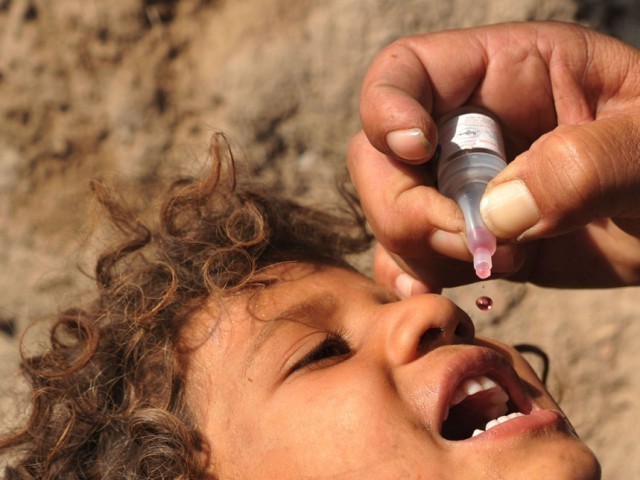
Pakistanis, although not polio-free, are happy because of a research which confirms racial stereotypes in the matter of size with regards to a particular part of the anatomy. And in this, Pakistan beats India - which is all that matters. PHOTO: AFP/FILE
A few days ago, a leading British newspaper carried a news story that stated:
“The World Health Organisation certified the south-east Asian region – which includes India but excludes Afghanistan and Pakistan – polio-free after three years without a single new case being reported. The WHO said this meant 80% of the world’s population lived in polio-free regions, an important step towards global eradication of the crippling disease.”
It is a massive coup for the people of India, for the people of those other countries now free of polio and for the world in general, for achieving an 80% eradication of the disease. ‘The world’ includes the people of Pakistan as well but instead of being upset about their stark exclusion from the polio-free list, they actually seem terribly chuffed – for a different reason.
The people of Pakistan, although not polio-free, are happy because of another, older piece of news based on a research conducted by the Ulster University. This research apparently confirms racial stereotypes in the matter of size with regards to a particular part of the anatomy. This difference in size has become a matter of great importance for Pakistanis, even greater than the presence of polio in their country.
In the study, India ranks fourth from the bottom, below Pakistan, and that’s all that counts. Of course, as long as we beat the Indians in such important matters – as we apparently did in a stiff competition – all else remains insignificant.
Richard Lynn, professor emeritus of psychology at Ulster, carried out the research referred to and it has been published in a scientific journal. Subjects from 113 countries were studied and the conclusions, such as they are, were arrived at. Let me point out that the research in question is being strongly criticised everywhere but there are few naysayers in Pakistan.
The mind boggles at the methodology involved in the collection of data for this study at Ulster and the sheer magnitude of the variables that must have been accommodated in the process.
But what the heck – the mind boggles at many things in these parts where, for example, workers administering polio drops to children are regularly shot at and killed. The mind boggles simply trying to encompass the mentality of the people trying to hamper the anti-polio campaign. After all, who would wish to prevent children from contracting polio? What kind of thought processes must such people have, not to mention motives?
If the people, who kill polio workers, indeed consider themselves to be acting on religious grounds, which religion is this that calls for people to lead a disabled existence, in pain and discomfort, unable to function as every human being has a right, a birthright, to do so?
And which religion calls for murder?
But of course, these things are not important to the larger section of the population, particularly that section which takes pronouncements made by the Council of Islamic Ideology (CII) seriously. They, after all, must believe that their religion allows underage children to be married and its women to have no say in important marital matters.
So let there be disability, misery and illness; let Pakistan marry off its underage population; let its men take as many wives as they and they alone like, and its women wither away in misery. And let its mothers have no say in matters concerning their children’s health, such as whether or not their children should receive the polio vaccine.
Let’s make sure that Pakistan remains amongst the countries that play host to the polio virus, since God forbid that any Pakistani should be vaccinated by anything that has even an imaginary chance of threatening fertility and related parts of the anatomy, however unconnected the vaccine may be with this threat.
There is only one thing that matters and we say that loud and clear: we must remain ahead of India, by whatever means possible.
It’s very confusing folks; it’s all jumbled together in our minds, just like this blog: anatomy, religion, patriotism, size and fertility, suppression of women, evil polio vaccines, America, and Zionist intrigue.
Long live Pakistan where it’s all okay, even polio, so long as Ulster tells it like it is.

Wednesday, April 2, 2014

A GOD IN EVERY STONE: A BOOK REVIEW

http://pique.pk/culture/02-Apr-2014/back-to-the-future

April, 2014


Back to the future
Speaking to the Times of India, Kamila Shamsie said that it was not easy to compare the writings of the various writers of Pakistan in terms of style or form, ‘except we’re writing about Pakistan.’ She also said that many of Pakistan’s English-language novelists are looking at history or politics in their work.
Three of Shamsie’s previous books were political. Clearly, Shamsie has a good grasp of history and a knack of weaving it into a story.
Kartography, her third novel was about Karachi and the recent history of Pakistan.  Her fifth book Burnt Shadows was shortlisted for the Orange Prize for Fiction and it went from Nagasaki to Delhi to Karachi and back to New York ‘binding elements of history and humanity that are both distant and seemingly unrelated.’ (Huffington Post).
A God in Every Stone, Shamsie’s sixth book is set in the pre-partition sub-continent, in the region that is now in North West of Pakistan, and about its ancient roots. It speaks of empire and the meaning of friendship, love and loss set in Peshawar, near the ancient Casatyrus, where every stone tells a tale.
Viv Spencer, a young Englishwoman, peers out of the window of her train while travelling to Peshawar in the year 1915 and spots a dolphin leaping in and out of the water along the borders of the Indus and Kabul rivers which run parallel to each other in a single body of water.
She muses that the dolphin is like a needle stitching the two rivers together. It is a superb piece of imagery.
Change the water to the passage of time for the theme of this novel, and, like Burnt Shadows, it stitches the past and the present of this region together with the story of Scylax.
Scylax, a Greek explorer and writer, lived around the 5th or 6th century BC. He was sent by the Persian King Darius to follow the course of the Indus in an attempt to discover where it led. Scylax returned almost three years later to report his findings to Darius. What is not fact is that Darius presented Scylax with a silver circlet to mark his honour, a circlet that disappeared in 334 BC, was found and lost again rather like the dolphin that disappears beneath the waves to re-emerge again and again. 
The story weaves through Alexander and the British colonial years to resurface in the 20th century via the First World War. In fact it spills out of the novel and into the present given the immutability of history, thumbing its nose at its manipulation and the destruction of historical artefacts, the stupas, statues of the Buddha, and of the historic site at Shahji ki Dheri now a slum near Peshawar.
Viv had been working at an excavation site in Peshawar. However, when the World War I starts, returns to England to work as a VAD in London. But she soon returns to India, fleetingly meeting a young Pashtun by the name of Qayyum, who is also returning to Peshawar.
Like the dolphin Qayyum stitches together the past and the present. He has served in the British army just as Scylax has served Darius who, like the British after him, went on to conquer India. Numerous Indians were injured and killed in the War against the enemies of the Allies in the First World War. Qayyum himself lost an eye in Ypres before returning home, just as Scylax returned home after charting the Indus. 
Scylax, for all his service of Darius, was not on the side of his emperor when his people, the Carians, rebelled against Darius and the Persians, Scylax sided with the Carians. And Qayyum? He joined the Khudai Khidmatgar Ghaffar Khan’s non-violent Red Shirt movement against British rule realising, ‘if a man is to die defending a field, let the field be his field, the land his land, the people his people.’ Ironically, this inspiration comes when he met Viv Spencer, once again.
Shamsie has explored a new style of writing in this book, one that was also used by James Joyce in Ulysses and by several others, more recently by Frank McCourt in Teacher Man, she has dispensed with quotation marks which is something not everyone will appreciate. I’m not sure I did myself because it made it harder to review the book. Checking to see who said what felt uncannily like searching for the circlet at times.
Surprisingly it turns out that quotation marks were only first used in the 16th century, so perhaps this is all part of Shamsie’s scheme of turning history around and bringing it into the present which for readers today might be rather unsettling, if appropriately evocative.